packing for the pyrenees
An ultralight packing system built for a solo Pyrenees trek during a season of transition and open questions.
I planned the Pyrenees trip during a season where I didn’t have clear answers about what was next. I’d left my job at Spotify and was a few months into a sabbatical, spending most of my time in New York building tools and writing and trying to figure out what I actually wanted to work on. The outdoors have always been the thing that resets me. Even living in Manhattan, where my week is mostly screens and subways, I orient around the handful of trips each year where I can carry everything on my back and go somewhere high and quiet.
This one was six days along sections of the GR10 between Cauterets and Gavarnie, crossing into Spain through the Brèche de Roland at 10,000 feet. I wanted something remote and physically demanding. I wanted to think, and I wanted the kind of thinking that only happens when you’re tired and alone and the landscape is bigger than whatever you brought with you. The Pyrenees felt right for that.
What I found on the trail was that the logistics of the trip mattered more than I expected. When the fog was chasing me up a headwall on day one, or when I was timing a push against a thunderstorm on day six, I wasn’t reflecting on career decisions. I was making real ones: when to push, when to stop, where to camp. The gear either supported those decisions or got in the way. This post is about the system I packed with, and why building it the way I did let me stay focused on the parts of the trip that actually mattered.
Creating space
Going ultralight creates space for the things you care about carrying. For me, one of those things is a Fuji XT5 with a 16-80mm lens. It’s heavy for a backpacking setup. A capture clip on my shoulder strap keeps it accessible while I hike, which changes the relationship entirely. When the alpine glow showed up for a few brief minutes after I pitched my tent below the col du mulet, I had the camera in hand.
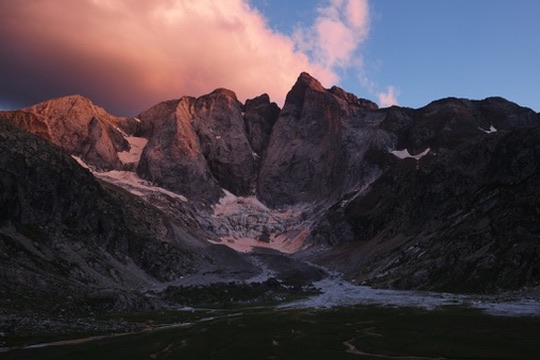
The camera is one example. Another is a tenkara fishing rod — a collapsible, reel-less rod that weighs maybe three or four ounces and extends to about 10 feet. I’d heard there was good trout in the Rio Ara, a river running through the remote backcountry on the Spanish side, and I wanted to try. The broader point is that trimming weight everywhere else means you get to be deliberate about what stays. A notebook and pen on the strap pocket. A book in the ditty bag. An e-reader for the evenings. A fishing rod that weighs nothing. These are the things that made the trip feel like mine and not just an exercise in covering miles.
The system
My pack is organized by access frequency, inspired loosely by Darwin on the Trail. Things I grab while moving live on the outside or in strap pockets. Things I unpack at camp go in the main compartment.
Straps and outside:
- Fuji XT5 + 16-80mm on capture clip
- Trader Joe’s 1.5L water bottles (outer pockets)
- Trekking poles
- Sunscreen, knife, Nitecore headlamp, sunglasses
- Notebook and pen
Outer pocket (ditty bag):
- First aid, electrolyte tabs
- CNOC Vecto + water filter
- UGreen 10,000 mAh battery, 2x USB-C cables
- Toiletries
- Book
Main compartment:
- Durston X-Mid (frameless)
- Sleep system: Hammock Gear Burrow quilt, Nemo Tensor pad, Nemo inflatable pillow
- Cook kit: MSR Pocket Rocket Deluxe, titanium 500ml pot, titanium spork, First Ascent coffee (from Garage Grown Gear)
- Clothing: 2x Wool&Prince tees, 1 pair of shorts, 1 pair of pants, baby bottle of detergent for handwashing
- Mountain Hardwear Kor Strata midlayer, Montbell Versalite rain jacket
- Tenkara rod
The zone system became something I didn’t have to think about on the trail. After a day or two, I stopped checking where things lived. I just reached and they were there. That’s the point — when the system disappears, you’re free to focus on walking and the landscape around you.
Two packs, one dry bag
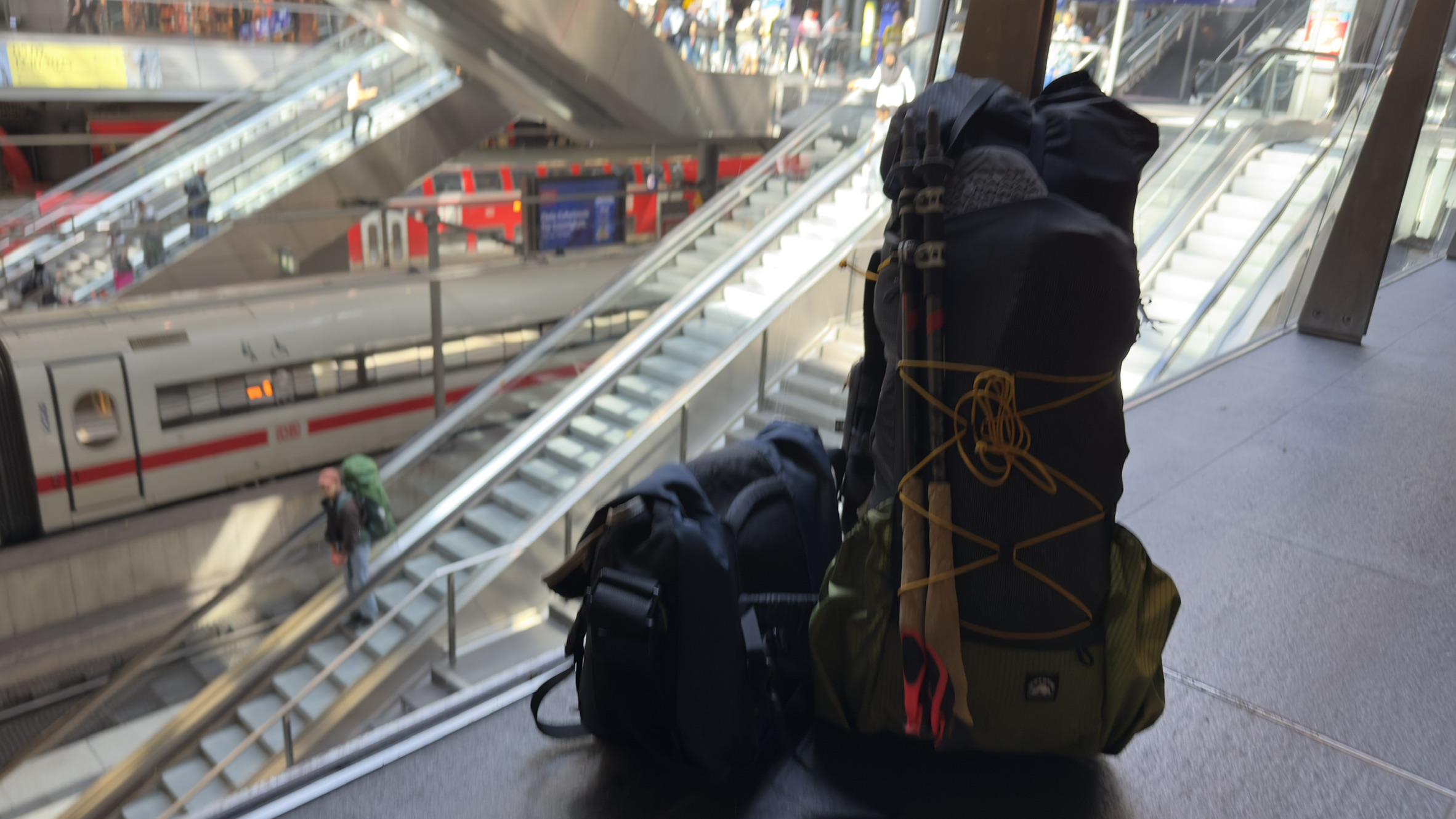
For the Pyrenees I ran a two-pack system. My SWD SL40 carried everything for the trail. A messenger bag held my laptop, extra camera gear, and city electronics — things I needed for remote work before and after the trek but would never carry into the mountains.
The transition piece was a roll-top dry bag containing my electronics kit. It swapped cleanly between the messenger bag and the main pack depending on whether I was in the city or on trail. When I stashed the messenger bag in luggage storage in Lourdes before departing for the trek, the handoff took minutes. No repacking, no second-guessing what goes where.
This setup lasted three weeks across trail days, city days, and everything in between.
The cuts
Getting the base weight down meant trimming across the board rather than one dramatic swap:
- Pack: The SWD SL40 itself saved about a pound over my previous pack. Comfortable, fit my torso well, and carried the weight without a hip belt dig.
- Sleep: Switched from a sleeping bag to the Hammock Gear Burrow quilt. Lighter, packs smaller, and I sleep warm enough that the ventilation works in my favor.
- Shelter: Durston X-Mid. Frameless, lighter, faster to pitch.
- Everything else: Smaller containers instead of full bottles. Minimized duplicates. Each cut was small; together they added up.
Eating through the mountains
Food strategy in the Pyrenees looks different than a typical backcountry trip in the US. I carried a few freeze-dried meals as emergency backup — the kind of thing you want if you’re stuck somewhere for a day or two — but I wasn’t living on them. Most of what I ate came from stores and refuges along the route.
In the towns and villages I’d stock up on dried sausages, cheeses, jams, and bread. These pack well, don’t need cooking, and taste better than anything in a foil pouch. At midday, the refuge system offers picnic lunches — pre-made meals packed into a plastic bag that you carry along the trail. Good carbs for the middle of the day when you need them most. Between the refuges, the village stores, and the emergency freeze-dried meals, I never worried about food and rarely carried more than a day or two of supplies at a time.
The refuge infrastructure in the Pyrenees is reliable enough that you can plan around it. That changes what you need to carry and how much weight sits in your pack on any given day.
Picks that earned their place
Leki Cross Trails — I found these used at the REI store in Manhattan for a good deal. They’ve become one of my favorite pieces of gear. Comfortable from the first mile.
Trader Joe’s 1.5L water bottles — Simple, cheap, light. The Pyrenees have abundant water sources, so I rarely needed to carry more than one bottle at a time. I kept a CNOC water bladder as backup capacity for longer dry stretches, but most days a single bottle was enough.
SWD SL40 — The fit and comfort made the weight savings feel free. A pack that carries well changes how a whole trip feels.
Capture Clip — Keeps the Fuji accessible on my shoulder strap. The difference between having the camera out and having it buried is the difference between getting the shot and thinking about getting the shot.
Tenkara rod — Three or four ounces for something that let me fish the Rio Ara in the Spanish backcountry. The weight cost is negligible and it gave me a reason to linger at water that I would have otherwise just crossed.
What the system proved
On the evening of day one, I almost didn’t climb the final 700 feet to camp. The fog was right behind me and I considered setting up trailside. I pushed through, set up the tent below the col du mulet, and caught a few minutes of alpine glow from the nearby refuge before everything went white.
On day six, I timed my push through the Brèche de Roland against an approaching thunderstorm, breaking camp at 7am and moving through the clouds. The thunder started half an hour from the gap. When I crested the Brèche and saw the Refuge des Sarradets on the French side — the fog had stopped dead on the Spanish side — I was carrying everything I needed and nothing I didn’t.
These moments don’t happen because of gear. They happen because the gear got out of the way. A system that lets you stop thinking about logistics is a system that lets you make real decisions in real time. When to push. When to wait. When to trust yourself and climb into the fog.
I live in New York and spend most of my time building software. But the trips where I carry everything on my back, move through unfamiliar terrain, and make judgment calls with real stakes — those sharpen something that desk work can’t reach. The packing system is just the infrastructure that makes it possible.
---
If you enjoyed this post, you can subscribe here to get new posts and a weekly marginalia digest. No spam, unsubscribe any time.